November 18, 2026
Designing Complex ERP Systems: Turning Data Chaos into High-Performance Dashboards
Most enterprise software is a UX nightmare. Discover how applying strategic logic and 'Bold Minimalism' turns complex business data into intuitive, scalable ERP dashboards.
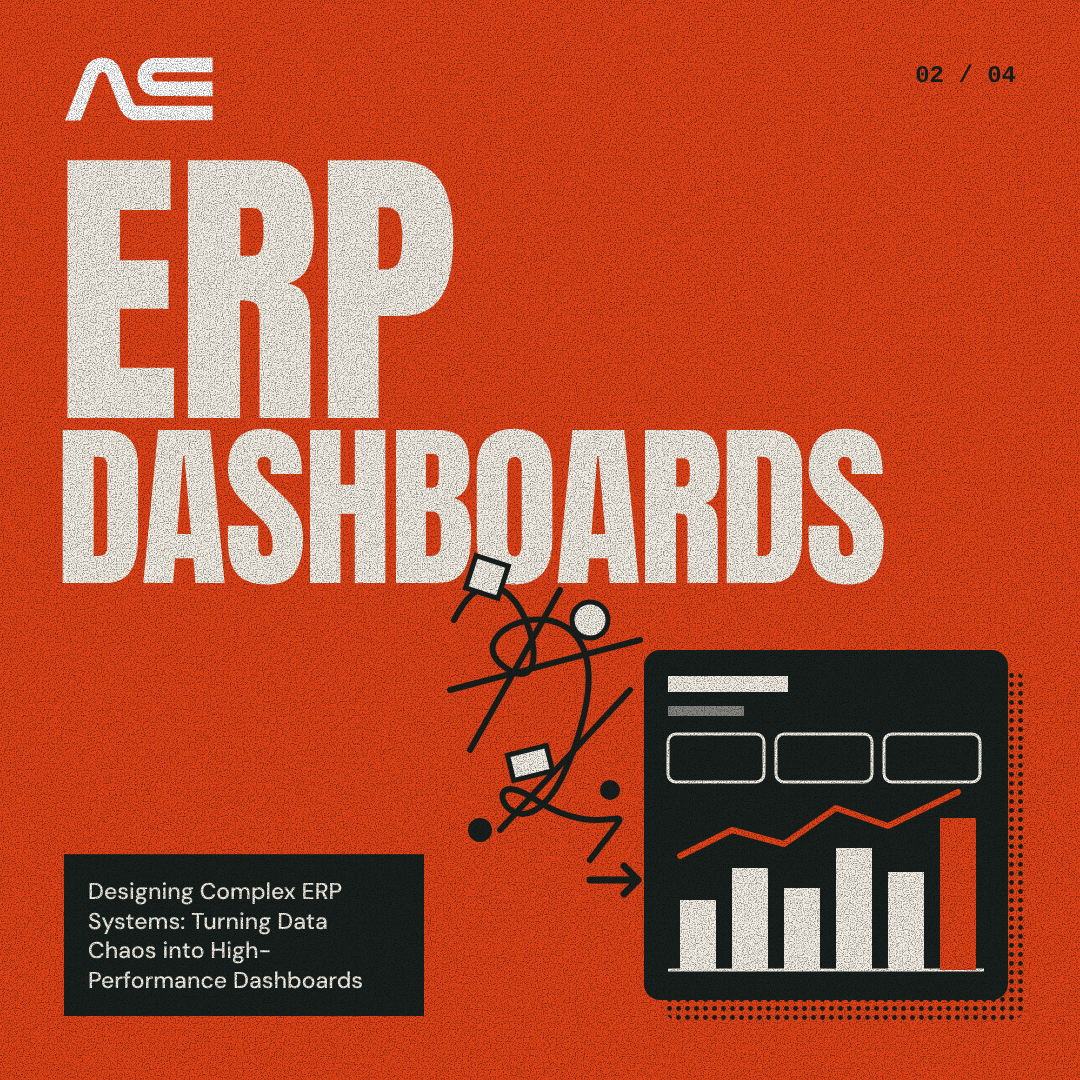
Most enterprise software is a UX nightmare. Companies invest heavily in custom ERP systems, only to end up with cluttered, overwhelming dashboards that require a 100-page manual just to navigate.
In the enterprise world, bad UX doesn't just frustrate users—it kills productivity, increases onboarding time, and causes critical data entry errors. The solution isn't to add more features; the solution is strategic, logic-driven design.
The 'No Fluff' Philosophy for Complex Data
When dealing with heavy data, aesthetics must serve functionality. Applying a 'Bold Minimalism' approach to ERPs isn't about making screens look empty; it's about ruthless prioritization. Every pixel, button, and table must justify its existence. By stripping away visual noise and unnecessary elements, we allow the actual data to stand out, enabling decision-makers to read, analyze, and act instantly.
Architecture Before Pixels
You cannot design a scalable enterprise system without a deep understanding of its underlying business logic and database structure. Backed by my Computer Science foundation, I never start an ERP project by drawing UI screens.
The process begins with Information Architecture (IA). We map out complex user roles, define permission levels, and structure data hierarchies. We translate heavy business operations into seamless digital workflows. If the core logic fails, the UI fails—no matter how good it looks.
The ROI of Strategic Enterprise UX
What is the actual business impact of redesigning a complex ERP system into an intuitive digital product?
Drastically Reduced Onboarding: New employees can navigate the system intuitively without weeks of training.
Zero Operational Friction: Streamlined workflows mean tasks are completed faster and with absolute precision.
Minimized Human Error: Clear microcopy and logical data grouping prevent costly mistakes in inventory, accounting, or HR modules.
Good ERP design is not a luxury. It is an operational multiplier that directly drives business efficiency and growth.
About the Author:
Abdelrahman Osama – UI/UX & Product Designer
I specialize in architecting complex systems (ERPs), mobile apps, and high-converting E-commerce platforms across the MENA market. I bridge the gap between 'Bold Minimalism' and robust programming logic to engineer digital solutions that drive real business growth.